#51
MS Interview Update Title
Update all this
Aubrey Bergauer breaks down the latest data shaping the performing arts sector. From revenue trends and audience behavior to ticket sales and donor patterns, this episode explores what the numbers reveal about the future of arts organizations—and why the path to sustainability will require more than cutting costs.
Changing the Narrative needs the contact information you provide to us to contact you about our products and services. You may unsubscribe from these communications at anytime. See official rules here.
Transcript
[00:00:00] Hey everyone. Welcome to season six of The Offstage Mic. I can't even believe we're here in some ways. We started the podcast in 2022, almost exactly four years ago as I record this. It started as an experiment and people had been asking me to do a podcast. They said they wanted more of my content and specifically asked for this medium for a podcast. And I said at the time I would try it. See how it goes. And that I would do an eight episode season and put it out. Kind of as an MVP like minimum viable product, not most valuable player. And we would see how it went. So that's exactly what we did. And that pilot season quickly racked up thousands of downloads from all over the world, from all kinds of arts professionals, from arts administrators and all kinds of folks in arts management up and down the entire org chart artists as well. I can't tell you how excited I get when artists engage with my content and board members as well. So if you've been around for a while, listening for a while, hopefully you've noticed I have been pretty intentional about the content that we bring you doing this thing, this podcast, and concentrated seasons, instead of going on every week without end. And you all have just been so great along the way.
I have to say, it has been so incredible to see the growth of this podcast. I'm going to share some stats on that in a moment, but right now I just want to say out of the gate that not only is this a milestone that we are starting season six, but and also this episode just so happens to be episode 50, and I have a bunch of fun things to share with you on that too. And by fun things, I mean presents giveaways. So we will get to all of that too.
Right now, let's dive into some fast facts for you. This is kind of a theme for this episode. Actually. There are lots of data, lots of stats and facts. I'm going to be sharing with you this whole episode as we kick off the season. It's also a theme for all of my work data following the data. If you've known me for more than two seconds, probably you know that I am a very data driven person in general and bring that to everything I do. And that is exactly how we decided to kick off this season for you. So some fast facts on the podcast and the general land of podcasting I wanted to share with you because it feels like a good milestone to do that.
So approximately 115 million people in the US are listening to podcasts on a weekly basis. That number used to be 80 million just a year or two ago. And I know this, because we use it in our sponsorship deck for this podcast. And I had looked it up again preparing for this season, this episode, and saw that that number is up from 80 million to 115 million. Like I said, had just a year or two. This comes from Edison Research, by the way. It's verified by other sources as well. And what that means is that 40% of the US adult population is listening on a weekly basis. So if you look at monthly basis, it's like 55%, which is more than half of the US population. In other words, podcasting continues to be a rapidly growing medium. You all know this as podcast consumers yourselves, so hopefully you find this interesting, but we see it in our numbers too, is the point I wanted to make. And we see you all showing up, which is just really awesome. Now, despite that growth, most podcasts do not make it past episode 21. That's the average number. Most podcasts don't make it past episode 21. We hit double that last season, season five on episode 42, and now today, this moment. Like I said, we are hitting that 50th episode milestone, which is pretty exciting.
And like I said, I'm going to share a little more to celebrate with you in a moment. Now, the median show, just to keep going through some of these, the median show gets 421 downloads an episode, or that amounts to about 1425 downloads a month. To put that in perspective. We get around 3000 downloads every month. Often more when we're in the swing of production, like we are now as we launch the season So this and the reason I'm sharing all of this is one the data, as I said, but two, it's just a testament to you all showing up. And we are going to celebrate that this episode. Okay. Almost done. 70% of podcast listeners listen to most or all of the episode. That's on average that's been verified by the hosting platforms themselves. Apple, Spotify, Riverside. For those of you who know Riverside. Now, for I said, The Offstage Mic that numbers 93%, 93% of people listen to most or all of each episode, and that just shows how engaged we are as consumers of podcasts. On the whole, we listen and we tend to stay. And again, you all, just completely surpassed that average stat. So thank you so much. All of that is why we are able to do that. That's why I'm sharing all of this, why we are able to continue bringing you this content that you all asked for, and even continue to ask for. Everywhere I go, people are asking me, Aubrey, when's the next season of the podcast coming out? So we're here. We made it and I hope that, you hear that? I'm just pumped, and I'm honored to be able to help share those numbers. Hope you are excited to hear them.
And the last that I'll share, because it really affects something new for this season, is that the number one discovery platform for podcasts is now YouTube. Another way to say that is that there has been this tremendous growth. I'm sure you know it in video podcasts. Spotify, as a comparison, now has over 250,000 a quarter million video podcast on their platform. Apple is catching up. They just announced they are rolling out video podcast support as I record this, So I am so happy to share that this season we are rolling out video as well. Maybe you're even watching this episode right now. If you prefer to listen, only you know you're driving in the car on the way to work. Whatever the data show, the rise of video. Podcasting is not killing audio. I found that very interesting. So all to say, different strokes for different folks. And no, we've still got you on the audio only version two. And I just want to say, as I'm starting to wrap up this welcome here, doing this video is back to that MVP model again, minimum viable product not most valuable player. We're back to that MVP model. Because if there is anything else you know about me, it's that one. I follow the data. You heard me say that already. I'm doing it now with this video roll out. And two, I love a good test, a good experiment. I always recommend that to the organizations I work with to test, to iterate. And conversely, I don't say, you know, swing for the fences, roll out this big, new expensive thing you want to try, but do something viable, test it, put it out there, measure the results. You better believe we're going to be looking closely at our numbers this season to see who's watching versus audio only that kind of thing, and then refine, make adjustments and up your game when you do it again. So all to say trying something new, we are upping our game. But pick your pleasure eyes or ears and I'm just so glad you're here.
All right, I said, we have some giveaways for us to celebrate and I am talking when I say giveaways. I'm talking gift cards for any of my programs. Changing the Narrative t shirts. Oh. We even have a free audience development boot camp for your entire organization that we're going to give away. I'm going to share all the details on these gifts and how to win, how to get yours later in the episode, including how you can enter multiple times all because I am so excited you are here. I am so excited that you have made this podcast what it is, and I am so excited to get this season going.
This first episode is all about the data and next up we are looking at data in the field. What are the big trends happening across the performing arts landscape? What is going on with our audiences at our orchestras, opera companies, theaters, ballet and dance organizations, even visual arts organizations and performing arts centers too. So welcome to season six of The Offstage Mic. Let's go.
I'm Aubrey Bergauer and welcome to my podcast. I'm known in the arts world for being customer centric, data obsessed, and for growing revenue. I've been called the Steve Jobs of classical music and the Sheryl Sandberg of the symphony. I've held off stage roles managing millions of dollars in revenue at major institutions. I've been chief executive of an orchestra, where we doubled the size of the audience and nearly quadrupled the donor base, and wrote a bestselling book on the business of the arts. And I'm here to help you achieve all these same kinds of successes. In this podcast, we are sorting through data, research and business strategies from inside and outside the arts, applying those findings to our work and bringing in some extra voices along the way, all to build the vibrant future we believe is possible for our institutions and for ourselves as offstage administrators and leaders. You're listening to The Offstage Mic.
Support for this season of The Offstage Mic comes from EvolvArts. One thing I've seen firsthand is that most CRMs make it really hard to run your org like a business. People ask me all the time, Aubrey, is there a CRM you actually recommend? That's why I want to tell you about EvolvArts, an exciting new CRM that is revolutionizing the art space and the only one I have seen built specifically to make it easy to execute many of the strategies from my book. Evolv Arts was created by people who were frustrated with the CRM at their own organization, musicians and board members with engineering and tech backgrounds. They created the tool that they needed, so it's built for modern use cases performing Arts organizations see all the time. It's extremely powerful, while still easy and intuitive to use in less than a minute. You can send personalized emails to first time attendees, identify and target patrons in every segment of the long haul model, and share a discount code with lapsed ticket buyers, inviting them to come back. Their team is responsive and supportive. If you are having conversations about CRM that your organization, please check out EvolvArts. That's evolve without the second E EvolvArts. Search them on Google for free demos or tap the link in the show notes for more information.
As we kick off this season, let's talk about our season theme a little bit. This season is all about Changing the Narrative ten years later. It was ten years ago, 2016 that I began a blog called Changing the Narrative. I remember the orchestra I was running was seeing a lot of success and growth with the strategies and tactics we were implementing really counter to the declining trends the orchestra had been facing in the years before I had arrived. And to be clear, these were strategies I had had success with at previous roles. As much as the role and scope would allow, sometimes people ask me about that. I had been putting these things into practice for a long time. Again, as much as the role kind of would allow for. And then when I became an executive director for the first time, I was able to put it all together from the top. And that is why I had gone from roles at larger institutions to a smaller organization, so that I could put it all together in a holistic way across the organization. By 2016, I was two years in to that job, and we were really bucking the trends. We had completely reversed course for the orchestra’s financials. I had inherited a severe budget crisis, and we ended up balancing the budget within one year. That first fiscal year I was there and in year two, we were on track for a surplus that would start to wipe out the accumulated deficit, like a big part of the accumulated deficit was wiped out within a year too. And with that kind of turnaround. I remember thinking, I need to share these stories of what's working with the rest of the field in service to the field, so that we can help others so that other people working in arts management can absolutely implement these same strategies too. So that was all again 2016. And in 2016, that year I started that blog called Changing the Narrative so that I could share what we were doing, share the data alongside of it and also take advantage of this. At the time, this other new ish strategy called content marketing. And now here we are ten years later, and I'm stating the obvious when I say that the world around us has changed so much in these last ten years, particularly the last few years. And yet, as we know, some, maybe even many of the challenges facing cultural institutions then are still so prevalent today.
So what does that mean today? Changing the Narrative today, ten years later, that's the theme for this whole season. And we're going to come at this question from several different angles throughout these episodes. Starting with today, the first episode of the season, with a look at some of the most recent national data. I want us together to have this collective macro view of what's going on in our field, and then some of the other episodes will really zoom in. Some of the other episodes, we're going to look at case studies from different organizations who are changing their narrative as well. And we're also, we're also going to look at this question from a couple other ways. So I'll lay it all out for you as the season progresses, of course. And to get into it now, I would say the headline is that it is hard to do what we do serving and leading our arts organizations today. So maybe you're listening to this and you're like, yeah, thanks. Aubrey knew it. But, seriously, if it helps to hear it from somebody said out loud, there you go. Arts management is hard work, and I think it's getting harder. That's my honest opinion now. Hard does not mean impossible, right? That's why we're here.
So to share a few different studies is what I'm going to walk you through. The first is from SMU Data Arts. This was released December of 2025. So just a couple months old at this point. And their actual headline on their website is deep revenue losses concentrate among large organizations. Others see slowing growth. So what they did was they analyzed trends for over 6500 arts organizations to understand how financial patterns, operational patterns have played out across different groups. You know, large, medium, small budget sizes. And what they found were what they called sector wide revenue declines. And the larger the budget of the organization, the more severe this is likely to be. So to put some numbers behind that. Large arts organizations this is across disciplines saw a 17% decline in total revenue over the last year. That is, after adjusting for inflation, 17% decline in total revenue, whereas small organizations saw a still a decline, but a 2% decline in total revenue over the last year, midsize organizations actually fared the best. Midsize organizations had a 1% average increase in total revenue. Again, that's after adjusting for inflation. So they are just barely, on the whole, outpacing the rapidly rising cost of doing business. Okay, the most substantial revenue losses, I said, are concentrated among large organizations, whereas small and mid-sized organizations still experienced losses. This is in their data, but they were generally more modest losses. For what that's worth. And I think that makes sense in some ways. Larger organizations, we're talking millions and millions of dollars in losses in some cases, while it's just simply less than that for small and midsize orgs. So, okay, by the way, I have to say, I did not see how SMU defined large versus midsize versus small in their methodology. I'm sure it is spelled out somewhere they had like some more detailed data tables and reports that you could click into. So I'm guessing it's there somewhere. But as I was reading through this and reading their methodology, I didn't see it, but I would say because I know somebody's going to ask me, but I would say it really doesn't matter. I don't think for this purpose of talking, we're talking big trends, broad strokes. So there you go. Because I know somebody who's going to ask, what's the breakdown?
Okay, now getting into this a little more. Let's get into earned versus contributed revenue. How does that all shake out paid attendance has really grown okay. If you've seen that at your arts organization you match that broader trend. And the problem though is that there are drops within other revenue streams. Maybe you've seen that too at your organization. Basically every type of contributed revenue is down over the last year individual giving, foundation, corporate, government, you name it. That's all down now.
Sidebar. People ask me all the time what they should be doing to get more corporate sponsors all the time, for years and years and for years and years. I have said that is corporate sponsorship. I'm saying is the biggest declining contributed revenue source. It's just been that way again for for many years now. This data continues to bear that out. Okay. So it's not necessarily saying something new, just that other revenue streams are also on the decline.
So we're going to get more into solutions for all of these trends throughout this season. But there is one for you right now. In a world where there is limited time, limited staff, you have to prioritize where and how to focus because we know we can't do it all. And corporate sponsorship is not it. So somebody listening probably needs to hear that corporate sponsorship not going to be the best bang for your buck. Best way to focus your priorities according to the data.
Okay, speaking of limited time and staff, this has been exacerbated because many organizations again, particularly the larger ones I'm getting into the next data point here, have combated this bad math budget equation by cutting personnel. I probably don't have to tell a lot of you listening this because you've seen it yourself, either in the headlines, you've seen all kinds of layoffs and cuts in different organizations, or maybe you've felt it personally. So along with personnel cuts, many organizations are trying to make their budget math, math by cutting expenses, other expenses outside of personnel or labor. I talk about this in my book. I also talk about this in a Run it Like a Business keynote, and I have written about this in my articles too. So shout out to the people who were originally reading that Changing the Narrative blog article or blog articles, you know, over the last decade. But the point is that I've said again and again throughout the years in these different formats is cutting your way to a balanced budget or close to balanced budget is a short term Band-Aid, because that budget resets all over again the beginning of next fiscal year. So you give yourself like the tiniest lifeline, and then you hit reset on all of it. June 1st, July 1st, or whenever your fiscal year begins. And then you're faced with the same issue all over again. Why? Because the costs of all the other expenses aren't going down. They're going up. I'm not just talking inflation, I'm talking labor. We are very labor intensive industry on stage, off stage, in the galleries, in the office, you name it. That's not going down. That's only going to go up. So what do you do? A lot of organizations. Then they cut again. But cutting like that only works when there is fat to trim in the budget Arts organizations. This is also probably in the category of telling you things I already know, but arts organizations generally have very little, if any, fat to trim. You know, it was cut last year when it got tough, right? Or the year before when things got tight or the year before that when that funding source went away or, you know, whatever, you know what I'm saying? You name it. Like, we've done this exercise so many times, you just cannot cut your way to health. And like, I said, we're definitely going to get into the solutions of what to do instead. But I just I get so sad when I see organizations making these sweeping budget cuts because I know, I know it's a short term fix, but I also know, and this is the sad part, that it is not going to get them to sustainability.
Let's say you're running your performing arts organization more and more like a business. Insights are clicking. Dots are connecting. You're hungry for more. Eureka moments. But what holds a lot of organizations back is just not having time to assemble the data you need. Bolero is a new tool for performing arts organizations that creates comprehensive, beautiful reports that give you simple answers to many of your complex questions. Questions like what programing actually brought in new audiences? How much of our audience returned this year compared to last? What events do people drive further into? See the data to answer these questions already lives deep in your CRM. Bolero reveals these answers so you can stop digging through data. Sometimes even Jerry rigging across spreadsheets trying to extract what you need. I know I've been there. And instead allows you to spend your time thinking, planning, and making decisions. If you want clear reports created with your ticket data in a fraction of the time and at a fraction of the cost compared to consultants, head to Hello bolero.com/changing the narrative and click Let's Talk at the top of the page. Bolero will be at both the Opera America and League of American Orchestras conferences this year. If you're attending, go say hello to Bolero. And if you book an introductory call before this season of The Offstage Mic the founder of Bolero, will help you identify five additional questions not already a part of their question. Back to custom build for you and your data. If you decide to work together. Go to hellobolero.com/changingthenarrative to take the first step.
This is a good segue into the next stat I wanted to share, because it illuminates this cutting spiral a little bit. Okay, this study is JCA comes to us from JC, a, trends in performing arts audience behaviors, what they called it, it came out in February of this year, February 2026. They analyzed over 12 million tickets, representing over $1 billion in revenue. Okay. That's a lot, right? There are 12 million tickets representing over $1 billion in revenue from performing arts organizations around the entire country. To understand how the start of the 20 2526 season compares to the previous three seasons. So this is really recent data we were talking about this fall of this season. We are still in. If you're listening to this in real time. So this is also especially interesting because everything they're looking at is all post pandemic data. So finally, finally, finally we are at this place in time where we are not having to compare sales to 2019, which feels like a lifetime ago in so many ways. So many ways, period. But certainly when we're talking about behavior, patron behavior. Right. Okay.
One of the things they underscored in their findings, which, by the way, we are going to link all these studies in the show notes. So everything I've cited in this episode just now, it's there for you. We're going to link it. But one of the things that they discovered is that Performing arts organizations are cutting performances. And again, they looked at just this past fall compared to the prior fall's, the beginning of our seasons. For most of us. And maybe this feels familiar for you and your organization. Maybe you're like, yeah, we made some cuts to to performances. Now, presumably these cuts are an effort to save on expenses, right? That's, like I said, just the conversation we were just having. But what's happening is cutting performances means with they said this is a quote from the study. With fewer performances on the calendar, organizations had less inventory to sell, which limited their ability to reach the same number of tickets sold or the same amount of revenue brought in from ticketing. We often make the mistake of thinking that all or almost all of our existing audiences existing sales will hold right? If we sold X number of tickets last year, and now we're going to shrink down the performances, we often think X will fill you know, those smaller seats or smaller, fewer performances left. But you know, they'll just kind of like consolidate themselves is what I'm trying to say. But with fuller houses and at every performance, that's kind of the logic that people follow when they're making these decisions, you know what I'm saying?
And I remember I've lived this before myself. This was back, right after the 2008 financial crisis. I was working at the Seattle Opera at the time and the seasons that followed that financial crisis. It was the same thing, same song, different verse. Right? And we cut back on performances thinking that we'll just have more sellouts when people naturally consolidate and that is not what's happening today. The data show audiences have fewer choices of dates, right? Stating the obvious, fewer performances means fewer choices of dates, and they are generally converting at lower rates because of that. So we are not retaining those people is another way to say it. Fewer dates, fewer choices. Not everybody's able to make it. And so we're not retaining people.
They have a great graph on their website in the study report showing this, where you can see the fall of 2022 just coming out of the pandemic, where the number of performances at that point were basically restored to pre-pandemic seasons. We kind of opened this is again painting the broad brush, but the data show looking, on the whole, we came out of the pandemic pretty much put on the same number of performances as pre-pandemic. And then arts organizations also in their data, arts organizations actually increased the number of performances they offered after that fall of 2023 and fall of 2024 and their total sales, total sales income, I should say, also increase those years. Okay. This matches the SMU data. That paid income from ticket sales has grown. So it matches this prior study. I cited. But then you get to the fall of 2025, the fall that we just had. And you can see on their graph fewer performances. Yes. Just like we said. And you can see the decline in ticket income that corresponds with that. So what does this tell us? This is telling us that if the solution isn't cutting performances, you cut performances. Not everybody consolidate. You're gonna lose some sales income. We just covered that. We can't just cut and expect, you know, the total sales remain the same, right? So this is the beginning or for some the continuation of like the cutting death spiral. Okay.
It is telling us that the solution meaning the past, the growth, the path to sustainability is to fill more of the seats that we have. You have to grow, not cut. The way to do that is to retain more of the people that we have. That is what the data is showing us. If we cut performances and no, we'll lose some of them. An alternative is to keep the performances we have and also keep the audiences to fill them. Plus ideally grow a little. Now, maybe you're hearing me say this and you're like, yeah, duh, that's what we want to do. That's what we're struggling to do. Therefore, we choose option A, which was to cut or in my case, not my preferable option. But you see what I'm saying.
So we're going to talk a lot the rest of this season about how do we do that, how do we actually grow, how do we keep the performances we have and grow the audiences we need so that they're not so empty so that we can have more people in the in the seats. So that's why we are starting here in this episode with the big picture, so that we have a mutual or shared context when we unpack it more later.
One more finding I want to highlight now that goes along with all of this is this is also a quote from the report. They say most organization types saw significant growth in discount ticket. okay. Increasingly, discounting is another example of trying to cut your way to health in this case, it's cutting prices. There are only three times I recommend discounting. I talk about it in episode 42 if you want to go look it up. Aubrey Bergauer.com/42. The name of the episode is How to Transform Patrons to Donors. So if you want to hear me talk more about when I recommend discounting, that's there for you.
But instead, for now, what I want to say is instead of cutting prices, what we should be doing is pricing our house so that we can use dynamic pricing that means raising prices as the demand supports it, rather than cutting prices because we projected incorrectly the demand to begin with. So there's a lot in there. We got a better projected demand. We have to price more properly out of the gate so that when the demand, when the ticket sales come, we can raise prices instead, we're getting it all wrong. And then we feel like we're being painted into a corner. I need to discount prices. And it's just another contributing factor to this cutting death spiral. Okay, so much more to say on that.
But for now, the last thing I'll say is that the name of the game, another way to say this is how do we use pricing to drive the behavior we want, use pricing to fill the seats, not paint us into that corner. As I said, okay, all of this leads to a final point from the study that I wanted to share, which is, quote, the timing of when audience members purchased tickets remained unchanged. Okay, in a world around us that feels like everything's changing or so many things are changing so fast, this one is unchanged. So I wanted to mention it. If you look at the graph they have on their website on this, it's kind of wild because you can picture this. They show the timing of sales for, again, this huge data set. Whatever I said, all those millions of buyers, $1 billion in revenue for all of 2022 compared to fall of 23 compared to fall of 24 and fall of 25. And that graph, you know, they have all those seasons stacked on top of each other. It's like almost identical. You know, it's four lines for four seasons, but it is almost like it looks like one big bold line. It's that much unchanged. In terms of the timing of when audience members purchase tickets, I found that super interesting. So timing does matter in terms of when you put things on sale. Timing, matters in terms of a consumer's consideration window. I've talked before about this big Google ticketing study and, it, proved or showed that consumers generally take 30 days to consider whether they're going to buy a ticket, regardless of if they actually buy at the last minute, or buy a little more in advance. That consideration window's 30 days. Okay. So that still matters. But just so you know, discounting to relate it to this prior point, discounting or not discounting, whatever the case may be, is not affecting when people buy so much. I think that's super interesting. When you look at those graphs, they have.
Okay, just a few more studies I want to briefly highlight. And then we're going to call it for today. This next one comes to us from Advisory Board for the Arts. They call this their 2025 ticket and subscription sales and 2026 Forecasts report, a study that published also February 20th 26th February of this year. So pretty recent. And I'll just say the pro tip to take away from their data. This is kind of an aside, but very interesting. The pro tip is keep going with your holiday programing. So they said, quote, over half of survey respondents reported higher sold capacity rates for 2025 holiday season performances compared to 2024. And just anecdotally, I can say this totally matches what I have seen among the organizations I work with. Someone posted in my Changing the Narrative client community, a few months ago after the holidays, saying their holiday sales were higher this year and they had asked, you know, is this true for anybody else? Are you experiencing this? And several chimed in saying, yep, true for us too. So okay, keep going on with your holiday programming.
Okay. Next, this is totally switching gears, but also in this ticket and subscription sales report, they said, quote, most respondents reported under 20% of subscriptions came from first time subscribers. So most respondents reported under 20% of subscriptions came from first time subscribers while approximately 20 to 40% of single ticket buyers were new to file buyers. Okay, this is huge. There's like kind of a lot packed into that sentence. This is huge because that is a lot of new buyers. One fifth of your subscribers are new or just under that if they're saying just under 20%, one fifth of your subscribers are new and one fifth to 2/5, that's up to 40% of your single ticket buyers are brand new. Again, this is what it says on the whole, so you can see where your organization falls or compares to that. But this is another point in the column for patron retention.
Okay? If you are hearing this whole episode and tracking along and thinking, yeah, we can't cut our way to health and sustainability, that all makes sense. Aubrey. This point is so critical to understand. I set up before, but I just want to lay it out there again. Arts organizations that don't want to cut need a path to growth. Those are the two levers you cut or you grow. And we already discussed why cutting isn't working. You heard all the stats today, and all the different revenue streams that are declining that I mentioned. And earlier, we looked at how this is true for every single type of contributed revenue to on the decline. Well, this is why this ticketing and subscription data matters. Connecting the dots between contributed versus earned revenue. You do not grow contributed revenue, particularly from individuals, unless you keep those new buyers.
So many people ask me like, why do you care so much about first time buyers Aubrey? And it's because most newcomers don't return unless we change how we invite them to return. This is a stat I've shared. You know, so many times in on this podcast and all of my content, the vast majority, up to 90% of first time ticket buyers, do not come back. The data behind it all is outlined in detail in my book. But the point is, without a different approach, they don't come back. Most newcomers never return. Meaning? Meaning they never become one of those other revenue sources we so desperately need. If they don't come back, they don't become a subscriber, right? If they don't come back, they definitely don't become annual fund donors. And they definitely never make it to becoming upgraded donors, major donors, because they break up with us right away and they drop off right away. And for subscribers, that renewal rate is around 50%, nationwide. This is not the ABS study. This other study, again, it's all outlined in my book. But, about half of our first year subscribers don't renew. And so we know from other studies in the field that the top prospect for a donation is a second year subscriber, not a first year subscriber, a second year subscriber. So that first year subscription renewal is such a big hurdle.
The data also tells us that once they do get past that first year for it get to a second year and definitely after they've been subscribing for three years, four years, however long they're in, they get so loyal at that point. But that first year, I call it the first year, Cliff. It's a really, really big hurdle. So you put this all together going back to this ABA data, this ABA study, when 20% are just under 20%, one fifth of all your subscribers are new every year. To lose half of them are some big percentage of them every time. Whatever it is for your organization is detrimental to growing that contributed revenue that we so deeply need. This all makes those declining contributed revenue stats we looked at earlier in the SMU data make more sense. The ticketing is connected eventually. Hopefully we're doing our jobs right to that person's contributed revenue later. So all of these different studies, they hope they really come together in my mind. I hope this is all coming together for you as well. I said earlier that it is hard work to run an arts organization. It is hard work to work in arts management, and the data supports this. The data bears this out. But I want to be clear as we start to wrap up this first episode of this season, the data shows us trends and trends are what continue without outside intervention. If we don't do anything, those trends, those stats we looked at anything that had a directional element attached to it. This is declining, that kind of thing. It's going to continue without doing something differently. It's going to continue without outside intervention.
Now, I didn't dedicate the last ten years of my life to creating and sharing content around this topic, and ultimately incorporating changing the narrative into a business, because I thought these trends were inevitable and could not be reversed. It's just the opposite. It is because I've seen it done many times now. I saw it with the orchestra I managed a decade ago or more, and I have seen it so many times since, with organizations in my running like a business academy who are bucking those trends right now. Other clients I've worked with, you're going to hear from some of them later in this season what they did, how they did it. So yes, it is hard running an arts organization these days, no question about it. But no matter your discipline, no matter your budget size, hard does not mean impossible. That is what gets me out of bed every morning. The task before us now is to assess and make a plan, and that is exactly what we are here to do. And season six of this podcast, I'll see you next week.
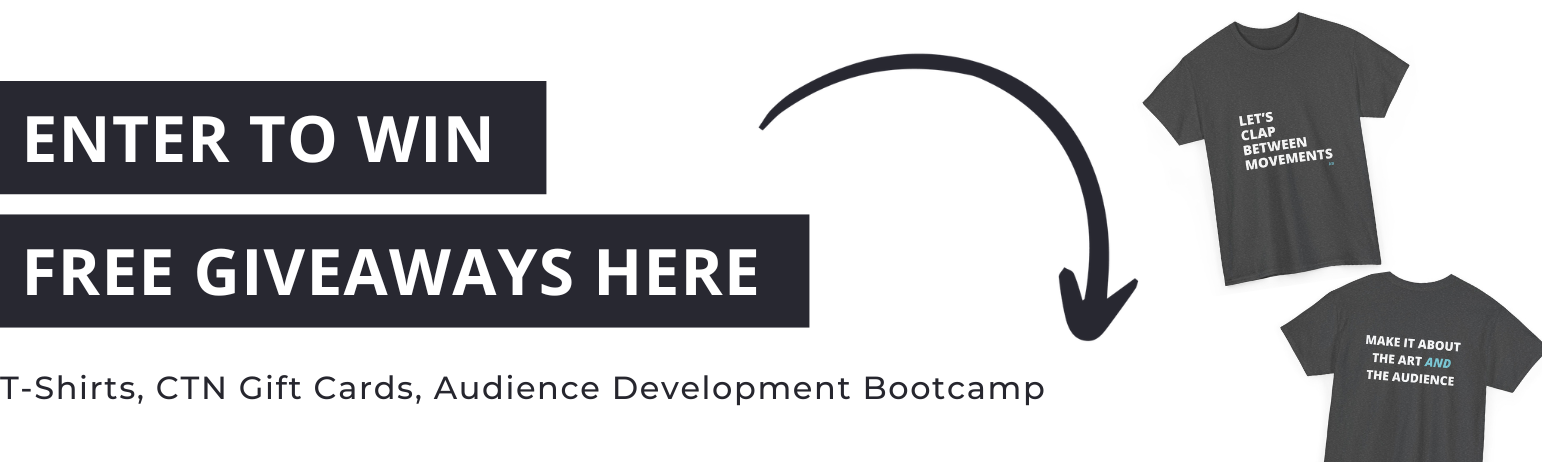
Okay. I promised I would tell you about the presents we were giving away to celebrate The Offstage Mic reaching 50 episodes. So we are giving away ten $100 gift cards toward any changing the narrative program of your choice. That includes my audience development, boot camp, my Run it Like a Business Academy, my uplevel program that can be used for yourself or for your organization. So ten $100 gift cards. We are also giving away a free audience development boot camp for your organization. That's a $500 value. And actually it's kind of like $1,000 value, because when you do the audience development boot camp, you then get $500 off the Run it Like a business academy if you wish to continue your training. So just know you get that $500 off without ever having paid $500 in the first place. The next prize is in the category of if you know, you know, if you follow me online, you may remember two ish years ago, I'd say we made a very limited run of Changing the Narrative t shirts. Today I'm holding it up. If you are watching. It says, let's clap between movements. And this is a nod or really a quote. I should say a nod to a quote from my work on audience experience, user experience research, and how so many newcomers talk about feeling shame. They express the emotion of shame when they didn't know when to applaud, or they got shushed for clapping at the quote unquote wrong time. So this shirt says, let's clap between movements. And that's the front. And on the back it says, make it about the art and the audience. And we'll put a picture of it on my website too, so you can see better than me kind of waving it around right now. But we have ten of these that we've brought back from the print archives. So, we'll be giving away those as well. All together, these prizes, it's like a few thousand dollars worth of giveaways and they're all for you. So how to enter to win one of these is go to my website, AubreyBergauer.com/50 for episode 50. And you'll see all the detailed instructions there plus a place to enter. this giveaway is going to run for two weeks. So we will announce winners not in the next week's episode, but maybe the week after that or so. Just because some people don't listen right away, we know this from the data going back to the top, and there is actually, I have to say, a long tail of people listening. People are discovering the podcast all the time, which we love. But two weeks is where, I guess in this case, the early bird gets the worm. So to be specific, for those who are like, just give me a deadline. April 30th, 2026 if you're listening in real time and one more time, that is AubreyBergauer.com/50. This is my way of saying thank you. Thank you for your support of this podcast and just, my way to celebrate this milestone with you. Now go enter to get the goods that are waiting for you.
That's all for today, folks. Thanks so much for listening. And if you like what you heard here, hit that button to follow and subscribe to this podcast. And if you've been around for a few episodes now, would you please consider leaving a quick rating or review? I really can't thank you enough for your support in this way. To all of you, one more time. Thanks again. I'll see you next time on The Offstage Mic.
This season of The Offstage Mic is produced by me, Aubrey Bergauer. Additional production support as well as editing is by Morreale Digital. Our theme music is by Alex Grohl. Additional support this season comes from Sandy Kobashi and Johan. Did we? This is a production of Changing the Narrative.
This podcast is brought to you by Morreale Digital. We all want our arts organizations to reach wider audiences and engage our communities, right? Well, a video podcast is a great way to do that. But as I know too well, podcasts to take a lot of time and technical skills to do well. That's why I partnered with Morreale Digital. They handle the technical elements of production, editing and distribution so I can focus on showing up and sharing ideas that matter. To learn how podcasting can help you reach and engage your audience, visit morrealedigital.ca/podcast. That's morreale.ca/podcast or hit the link in the show notes.